• Skip to main content
  • Skip to footer

Leverage Your Book

Turn Your Content into Cash

  • Home
  • Author Spotlight
  • Blog
    • Book Marketing
    • Tips
    • Poetry
  • Resources

Sorry, no content matched your criteria.

Book Marketing

Email Marketing

Book Marketing

Why Email Marketing Matters for Authors

Email Marketing is a Reliable Way to Grow and Engage Your Audience

Many authors ignore something that can really have a huge effect on their presence, their community, their book sales, and what happens beyond the book.

You may think this is old school and you might not even recognize the value. However, successful authors will tell you their email list is the number one reason. They have a community where they have been able to build engagement and sell more books, get booked, be a speaker and get more business.


If you’re a nonfiction author, an email list is something you develop. Cultivate your audience by inviting them into your world. And because an inbox is extremely intimate and personal, the distractions that happen on social media and all of the algorithms that keep tightening and ratcheting down so that unless you paid a play, you’re not being seen are eliminated the other beauty of an email list.

You can ask your audience what they want, find out more about the people you are reaching, and you can ask those folks to share your content. Providing information, and useful tips, and demonstrating your expertise 80 to 90% of the time is a benefit to you and your audience. And every once in a while, you can invite your readers to take action to learn more, sample, or purchase your book. You make a subtle call to action. Once you have established trust, let your subscribers know where to go to get your book, and you don’t have to be salesy.

You can curate other people’s content to share. Some of the most popular newsletters are sent out by experts. They research and gather information their audience wants. And they’re sharing that information with their commentary.

Keep your newsletter and emails short. Keep them easy to digest. None of us want to be overwhelmed with too much content. And, if you focus on the content, the appearance doesn’t have to be fancy. Clean, clear, concise, and consistent make sense with email.

Email Marketing
Notebook with Tools and Notes about E-mail Marketing, concept

Email Marketing Tools

You are sending a gift to your audience when you use email. And there are a lot of tools out there that’ll help you with your email. I happen to be a fan of Constant Contact for this reason. They offer live customer support by phone or text. They onboard new clients and provide training. There are experts like myself. I’m a certified Constant Contact service provider. Create landing pages, schedule social posts, and add links to videos, all from within your account.


Constant Contact now offers SMS messaging and appointment calendars. The tools are there to build a website or link to an existing website. If you want to sell, Shopify is part of the mix. There are a lot of integrations and great templates where you can get started.

And then from there, you can continue to customize your email so that it looks like you and your brand, whatever you do, even if you have a tiny email list, a service provider can help you now and as you grow your list. Whether it’s Constant Contact, Convertkit, LeadPages, find a service and get started.

If you would like to try Constant Contact, please use my affiliate link. I think trying out the service will let you know if it is the right option for you.

Email is an Invitation and a Gift

Find and use an email service provider that fits your style and your budget. Figure you’re going to spend about $50 a month for your email service provider. As a result of your investment, expect a return of $4.00 for every dollar spent.

An invitation
female hands holding an open pink envelope with paper sheet and pink silk curly ribbon on isolated pastel pink background with a blank space


Why Use an Email Service Provider

And the reasons you go through a service provider:

  • you have to get permission to send people
  • your content and those service providers make sure that emails are delivered
  • They validate emails
  • Keep you on the good side of the internet and your audience.

Authors pay attention. If you’ve been using your personal email, it’s probably time to step up your game and use a service provider to engage with your audience. You can create automated sequences that will go out. Once people opt-in, you can give them different options. There’s so much you can do.

And if you’ve got questions about using email, as part of your strategy to market you, your book, and your business, get in touch with me. I’m happy to talk to you and just answer your questions and then we’ll see from there, what your next steps are.

This is Judy Baker, Book Marketing Mentor

If you’d like to turn your content into cash let’s talk. Even if you’ve already published, your book audience can grow long after your launch. Go to bookmarketingmentor.com and sign up for a book buzz audit, and we’ll look at, what’s keeping you back from reaching your audience and getting the results you want with your book.

Judy M Baker
Book Marketing Mentor

https://bookmarketingmentor.com
https://linktr.ee/judymbaker

••••••••••••••••••••••••••••••••••••••••••••••••••••••••••••••••
Get More Bang for Your Book Without Going Broke or Crazy!
•••••••••••••••••••••••••••••••••••••••••••••••••••••••••••••••• 
Schedule a book buzz audit for you, your book, and your business.
https://www.bookbuzzaudit.com
Author Spotlight on Salomie Chung

Author Spotlight

Author Spotlight on Salomie Chung

Salomie Chung Interview

Push S.T.A.R.T. Navigating the Path from Start-Up to Success

Our Conversation

Salomie Chung is a business coach. Her mission is to help entrepreneurs go from idea to a working business.

Salomie Chung in action

Salomie Chung Small Business Consulting – a Division of Prizm4 Enterprises LLC – is passionate about spotlighting the importance of small businesses to the economy. She supports entrepreneurship, product invention and development. She works with individuals with hobbies that are businesses in the making.

In this spotlight, with Salomie, we discuss how she helps aspiring entrepreneurs find the fastest way to cash and set up a business that can scale.

She loves to network and is developing a course around her book.

Push Start Book

Category: Business Development

Buy the Book

Connect with Salomie Chung

Connect with Salomie on LinkedIn

Visit her website

Many thanks to Salomie Chung for sharing her wisdom and enthusiasm for business success.

Author Spotlight on Debra Eckerling

Author Spotlight Book Marketing

Author Spotlight on Debra Eckerling

About the Book: Your Goal Guide, a Roadmap for Setting, Planning and Achieving Your Goals

Your Goal Guide a Roadmap for Setting Planning and Achieving Your Goals has a road trip theme. The first half of the book goes through D.E.B. the second half, gives you Strategies for Success.

Show Notes

Welcome, this is Judy Baker Book Marketing Mentor and this is Author Spotlight, and I am so privileged today to have Debra Eckerling as my guest. And you have an amazing book.

Debra: I would love to, well first thank you so much for having me. It’s always such a pleasure to see you and I’m thrilled to be talking with you today about my book, Your Goal Guide, a Roadmap for Setting, Planning and Achieving Your Goals.

I am the founder of the Deb Method, which is my system for goal setting simplified.

My background is in communication and project management, and because of my goal group, people would say, “Hey, Deb, you’re good at this. Can I hire you to help me get my book done finish this project start this project make a plan…I was meant to do, which is to help people figure out what they want and how to get it, so they can live a more fulfilling life and, in turn, impact others people’s lives. So, I rebranded myself the Deb Method worked, the system works perfectly with what I’ve been teaching for years.

The book came out in 2020 through Mango Press.


You, Your Book, Your Business

Judy: you’re perfect example of a busy entrepreneur who has a nonfiction book that is part of their business, but it’s not the only thing that you do.

How has the book, enhanced your business?

Debra: when you have a book, You can help so many more people.

I do workshops, or you can just get my book because it will walk you through my foundational process. And it will also give you tips to set yourself up for success.


Books Like Yours

Judy: If I was to ask you to name three books that are like yours, what would they be?

Debra: The Artist’s Way is definitely one of those if you love the artist way, grab your goal, guys. Atomic Habits (James Clear), because my book is like my motto goal setting simplified. So it’s very easy to read, very practical user friendly advice. The 4-Hour Work Week, Tim Ferris, in terms of creating the life you want.

Your Goal Guide
Buy the Book
Author Spotlight on Debra Eckerling

Connect with Debra Eckerling

  • thedebmethod.com/keep
  • http://thedebmethod.com/debcember/
  • info@the debmethod.com
  • thedebmethod.com/contact

Share this post

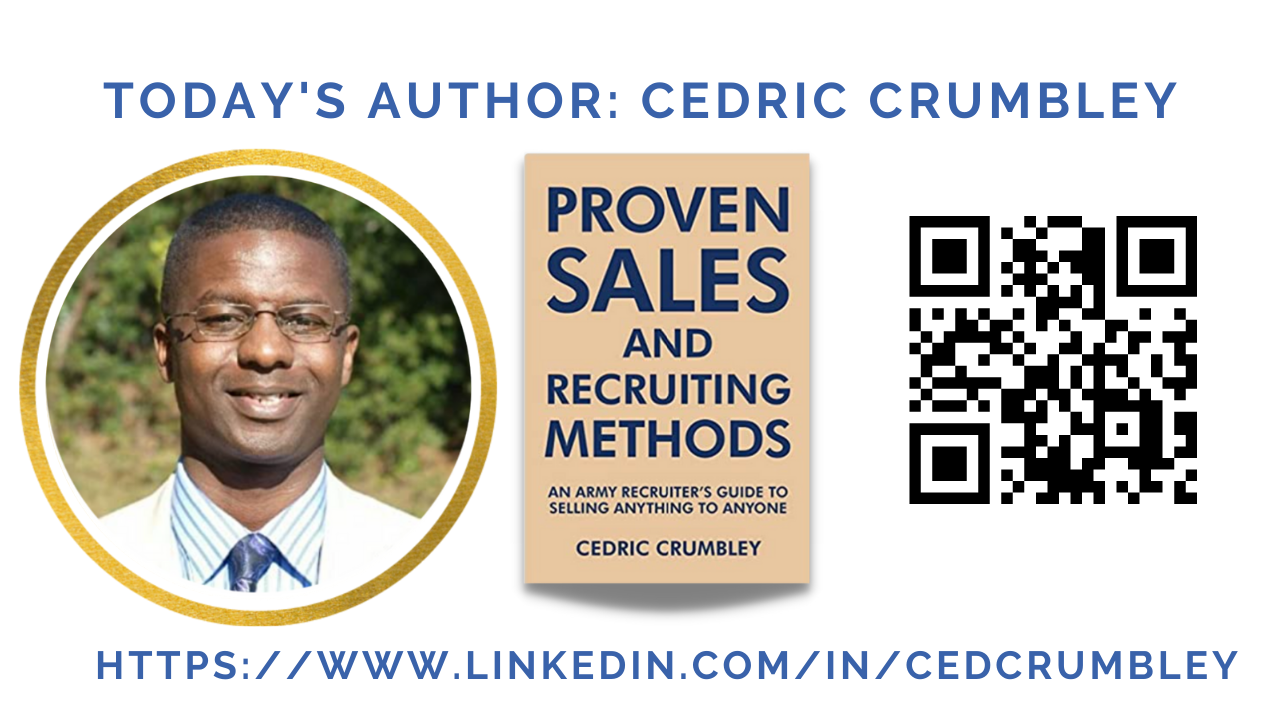
Author Spotlight on Cedric Crumbley

Author Spotlight

Author Spotlight on Cedric Crumbley

Link to 24:44 minute video interview https://youtu.be/MA-5YFGLerU

I used Descript to produce the transcript of Author Spotlight on Cedric Crumbley.

Judy: Well, the author spotlight is an opportunity where you would share about your book and how it’s working in your business.

And it’s an interview. I just finished doing one. Oops, sorry. I just finished doing one with another author and.

Usually, they are 30 minutes or less. And I ask you some specific, you know, I asked you about you. I ask you to share how you came to write the book. Okay. Who the book is for? If there, if there are, you know, as you were doing the book, did you research, did you find out, well, my book is like this one, but this is what I did different in mine.

And then sharing. Cool a cool story or two about you because

Cedric: and getting back on track, especially when I’m sleepy. Just say, Hey, Cedric, I come back.

When did you publish?

Judy: I, I totally get it. Look. How, how are you doing now? You’ve published your book. Yes.

Cedric: Back in 2014.

Judy: Okay. And how, how has it been doing.

Cedric: Awesome. I may, I never expected anything. I honestly, I never thought any about what bought a book.

Right? It was Ted Prodromou who put me up to it. He, he had told them about my story and he was like, “dude, you need to put that in a book.” And I’m like, nobody wants to read a book about an army guy. Right. He’s like, they want to read your story, you know?

And once that thing was published, I mean, I got an interview by newspapers. I was in the army at the time they had this thing called the “Army Recruiter Journal” they put me on that. I mean, it was like the whole world opened up. I mean, I got brought up to speak. I got a client that read the book.

Basically, I was doing a lot of these interviews kind of things. And ended up getting a client. One of my longest clients ever had for I think it was 18 months was paying me for. As a retainer and I didn’t ask for it. She, she, she reached out to me. Cause at the time everybody, everybody comes out of the woodwork.

If your book is good and it’s useful – the secret to getting clients

If your book is good and it’s useful, everybody comes out the woodwork and they want to pick your brain. And I kinda got burned. I’m like, dude, I’m not helping nobody else for free. And she was like, Say it again. I know you’re tired of having people who want it for free, right. If you, like, I set aside $1,500 a month to pay you and I’m like, I call you in five minutes, so

Judy: wow.

But how, okay, so typically, you know, over a million books are published every year, new books. So how, how, so this was an existing client?

Cedric: No, she wasn’t, it was just somebody, she read my book. And as you, it was a family friend. And she, she loved my book. She read it several times then I guess, cause she she’s in a different city and she reached out to me and she she’s like a financial genius, very successful.

And so she put me on a retainer after reading my book several times, but she’s . She kept talking about book. And I was like, okay, that’s cool. And then I never knew she wanted to pay me to consult her. So I’ve consulted her. I’m a business.

Judy: Yeah. Oh my God. That is, that is wild. And so did you do any active marketing of your book?

Word of Mouth Works

Cedric: Honestly? No. It was more word of mouth. People will read it and they would tell people like, man, you need to read this book. It kind of, it grew on its own. I mean, cause during this. It is on you. That’s what I’m saying. Life is a very unusual book. Ted would go and speak and he would tell people y’all need to get this book.

And so people would go and get it, and then they would tell people. Kinda like you ever heard of, there’s a book called, it reminds me of the Alchemist. It’s not as popular as that, but people, people talk about the acronym. They read this book and they tell people, you need to read this book, but it was kind of, how this book was like, but it wasn’t planned that way.

It’s not how I just wrote it because I was told to write and I’m asleep when I wrote it, I was like, okay, if I’m going to write this book, I was like, I’m gonna write it from me. And so there’s a lot of things I learned about sales that I didn’t want to lose. And I put it on his book after I put my heart and soul into a book.

Cause I’m like, I want to be able to pick it up and read it and apply it. And so that’s how I

Author Spotlight on Cedric Crumbley

Judy: wrote it. I love it. And I may just use our interview today as an Author Spotlight because you’re really answering the question. So I’m going to keep, I’m going to keep on you on this when. When you put this down and it’s a, it’s a short book, right?

It’s about a hundred, it’s a hundred and some pages. Now you’ve mentioned that you got a client and you started working with her right away. Could you talk a little bit more about that? How, how you were using the information and how that supported you in your business and how it supported the client, you were consulting.

Cedric: Well, she, she just liked the book because they knew me as, as they read books, they saw me. Cause I talk about being depressed, suicidal. They knew me when I was down and I didn’t know that I could get back up and they saw me go from a guy that was down. Couldn’t sail to being a top, you know, and doing pretty well in sales.

So they stay and then they got to read the book. And so. What I consulted her on. It was a couple of things. Cause she, she runs a business and she really, I found out and I, I noticed something about different business owners, business owners, they know how to do their thing, whatever that thing is. Right.

It’s greatest state financial knowledge. They know that, but they’re not in it’s there’s no put down on. They’re not very good at marketing themselves. They’re not very good at the sales technique. Right. So that’s what I was brought in. And so I would just ask you a question and it’s like is in the it’s in their head.

So basically my job was, I brought it out of her and I would ask her questions like, will you ever considered this? And I will ask, tell me about your business. And she would tell him about her business. Okay. Hey, you ever thought about this? And she would be like, no city and like, whoa, what if you did that?

As you could go and do it and it would bring man, she made a lot of money. Right. She made a lot of money.

Depression to Self-Development

Judy: Wow. Wow. Well, this is interesting because you know, when you’re talking about yeah, you went through depression and you felt suicidal. I never seriously felt suicidal, entered my mind once or twice, but I really suffered from depression all up until probably my mid thirties, very severe.

And I didn’t even realize it. And then I, I started, I got some help with that. And then I learned about exercise, which was also a way. You know, beat the beat that, what do you think was your turning point? How did you go from feeling despair? Because as you know what that is, to being able to turn that into a way that you can, you know, be the top salesperson and to share that information.

Cedric: So for us, it’s about coming out of depression and suicide. It was actually a friend who today is. She wouldn’t give up on me. So one thing about people, and this has been years ago, one thing about people contemplating suicide or harming themselves, they still are pushing people away. And so I pushed all my friends away and she was the last one to push away and she would just not, she wouldn’t go, she would talk to me in the morning, cause I was thought.

 At, I think, seven or something in the morning. So she would call me at six in the morning and I would tell her I don’t want to talk. And she was like, well, you don’t have to talk. I’ll do the talking. So she would talk to me from my apartment all the way to my job. And I never, I didn’t tell her at the time, rather than her talking, by the time I got to my job, I was happy.

Journaling and 30-days

I mean, I was mad just hearing old stories. I was on top of the world, but she kept doing it. Every single day and it, it, she helped me get through it. And, you know, and I started journaling about my day and I did a challenge to myself. This is when things changed and it helped me get up your slump.

And I think anybody can do this. So I put myself on a 30 day challenge. I wanted to see what would happen if I. I actually prayed an hour in the morning and I said, well, I don’t know what’s going to happen if I pray an hour a day for 30 days straight. Right. And I’m a generalist thing. Right. I don’t know if it was just endorphins.

You could say it was God. I believe it was God. If you’re not religious, you can say what you want. I did this for 30 days and I journal I’m done. I documented it. Day one, nothing happened day two, day three, but by the 15th day I was meeting my numbers and I was the guy in shorts. By the 30th day, I was running a recruiting station in Houston, kind of storefront.

By the 30th day, we became the Tufts small station in the city of Houston and I won the award for. No, it was really cool. Right?

Gratitude Shifts Your Attitude

Judy: W you know, it’s really nuts for me too. I think it was it’s now it’s been over a year. I heard on one of the podcasts that I listened to you and I not even sure which one I heard about the gratitude diaries and that book.

Amazing. Fantastic people who’ve been telling me, oh yeah. Just write down three things that good things have happened to you during the day. And I thought, oh, this is such hogwash. I said, okay. I know. And I said, okay, so it’s hogwash, what do you have to lose? You? Like you, I said, okay, I’ll do it for a month.

I’ll see what happens. And as I’m listening, I was listening to the book and I’m, and I started my journal. And I went, oh, oh, oh. So that’s it. I’m reframing. What am I focusing on? I’m not focusing on, oh, I bumped my toe. I got a stubbed toe. I’m focusing on. Oh, the birds are singing outside. There’s sunshine.

There’s something good that happened. And so now I don’t have to look so hard for the good stuff and the bad stuff. You can stay over there. I’m not going, I’m not going into the dark forest. I’m staying over in this part of the world. Amazing.

Well, you transitioned out of, out of being in the army and then you took those skills. And then how, how did you start using (your book)?

Consulting as a Business from the Book

Cedric: So I started consulting the business business owners and people who knew me. And thankfully a lot of people online the online marketing community one gentleman sent me a client that’s actually in Canada.

And I just thought of getting clients from word of mouth, another word of mouth. They would be the remote book. Perry Marshall. He’s the Google ad-words guy. Man. He’s a really good guy. He wrote about me and his newsletters. Right. Really changed my life. So people would read his newsletters and I guess they would like, yeah, people would reach out to me and they will ask weapons.

Do you and Perry have I’m like, we don’t have any business. He might do. He wrote about, I didn’t even know, para was writing about me, your AMIA’s newsletter. And so I read it and I like, and I sent a message to. And I like, dude, thank you. He just missed me. He sent me a message back is well deserved, you know?

So he he’ll see things like that. People write about you, you know? Cause then everybody was like, well, who’s this Cedric guy

and I’m just a regular guy. I mean, there’s, I’m happening superpower. I’m just a regular guy.Superpower

Judy: Well, I think your superpower is you do tell stories and you are relatable because. You’re very down to earth. And I think a lot of people we run in you and I have both done it. We went into people who are salespeople and we’re running out the door because we don’t want it.

We don’t want to get blasted by them. We don’t want to get manipulated by them. And that is so not who you are. Yeah,

Cedric: right. Unless my company makes me do it now I work for a company now and when I’m not doing that. Yeah.

Judy: Well, you’re not manipulating people. You’re sharing information. I mean, I think that’s really where you’re coming from is coming from the heart.

Yeah. And it, and it’s good stuff.

Now, how did you meet Ted?

Because Ted and I have been friends for about 20 years. (Ted Prodromou, America’s Number 1 LinkedIn Expert).

Cedric: I want to say it was through Maybe Perry, Marshall put something out. And I went and got the book from the bookstore and I read it and I started applying it and I started getting results and I sent him a message on LinkedIn and he sent me something back.

Oh yeah, I know what I said. I said, I read your book. And I liked it and I got some results and Ted said, thanks. Hi, ever, you need to change the hidden. I know you make them. So I changed my headline and I came back to him. I asked him when he’d be my mentor and he lies. Sure. And he became my mentor. And honestly that led to this being my mentor.

Judy: And that’s, that’s definitely Ted. And for those of you who don’t know, we’re talking about Ted Prodromou, who wrote The Ultimate Guide to LinkedIn. And I seriously, I have known Ted for 20 years. We served on a board together for the Bay Area Consultants Network. We you know, worked on some meetups together on video and different things.

And Ted is one of the most genuine, generous people in the universe. He’s also very smart and he has, he used to be very shy. He’s still shy, but he learned how to deliver his message with competence and power because he paid attention to how to do that. And so he’s a student, he’s still a student, but he’s also a fabulous mentor.

Brilliant guy. Absolutely. Are you thinking in terms of, you know, sharing your message and like you said, yours kind of just spread organically. If, if Pharaoh was way for us to help you connect with the people you want to be talking to, what could we, what could we do? So people who are watching this, how could they, how could they support you?

Good question. So I’ve had so many. Industries, contact me and use my stuff. But currently I’m making cold calls and lately I’ve helped the gentleman. He he, he paid me to teach him how to do cold calls. And so I’ve gotten rid of good, well, I’m a I’m I’m okay with outreach, cold outreach. So anybody that has sales team, that’s where my heart is at really helping sales teams.

I’m okay, too. But so anybody that has sales teams that want to know you know, how, how, because it’s more to it than just pick up the phone or sending an email. There was some internal stuff that goes on with salespeople that I don’t think a lot of people understand. You gotta be to come to them from that standpoint.

Well, maybe you give an example. I mean, because I’ll tell you, I don’t like doing, I don’t like doing cold calls. I mean, yeah. Most people don’t,

No One enjoys Making Cold Calls

Cedric: I actually don’t like making cool calls either. However, because it’s a very uncomfortable situation doing cold outreach sales people have a tendency to get beat down.

If so you, because that’s how you’re getting your revenue. That’s why you have this team doing outreach to bring in revenue. You gotta be able to understand, Hey, every now and then you need to pick that person up, ask them, Hey, how you doing? They just want to notice somebody cares about them. Are they going to dig on a waiver?

And they’re not going to, I mean, there’s studies that show. And in most industries, salespeople work, I think is 35% of the time. So there are companies out paying sales people going and getting 35% of the workout of them. And they don’t even know, but if they paid attention that they’ll study that show that

Judy: Well, it sounds a little bit like your now wife, you know, showing people that they’re being seen and heard is one of the best ways to connect with other people. And that applies if you’re having a conversation, if you’re looking to create a relationship, if you want to have better sales, if you called on me and I feel like you really care about me, I’m more likely to want to do business with you.

Okay. Well, that, that makes sense.

Inspiration

Cedric: The problem I have is I consult with other businesses and I do all kinds of stuff. I don’t know that, honestly, Judy, the problem that I have is I read so many books, right? Like I read David Oglivy.

And so the people who know me. They’ll contact me. I mean, I have the guy that launched a, a trucking company just different, crazy businesses. A gentleman came to me now he’s in I think loan loan make doing home loans. And so the thing is most businesses at their core are really marketing businesses.

So when you understand that you can really help any, any business. Okay.

Cedric’s Tip for Authors

Judy: If there was one thing you would tell a business owner who is an author about a successful thing they could do or something they could do that would enhance their book sales and their business sales. Because to me they’re related. What would you, what would you tell them to do?

Cedric: Before the book is written written or after?

Judy: It can be either one. How about after the, after? Because a lot of times people think, oh, it’s this big launch. woo woo. And I try to tell people, yeah, that’s a day in the life of your book, but your book is going to live a lot longer than that publication date.

Cedric: You have a different by four before boy, if you’ve already written a book, I would just do what I do now for my company.

I would write stories and provide a link to that book. People love stories. They’re crazy about stories. I write a story, a true story, and relate it somehow to the book and people will go and read like, okay, I like the story. Let me read whatever else his person put as the author.

Judy: And where are you publishing most of your stories?

Are you ?

Cedric: On LinkedIn.

LinkedIn is the Place to Publish Your Stories

Judy: Okay. And because my primary audience, like yours, is nonfiction business owners pay attention you all we’re telling you. Use LinkedIn. It is a fabulous way to connect with your audience. And now you can create a newsletter on LinkedIn, which is nuts. Plus Cedric, you also pointed out. You started getting picked up because Ted talked about you, Perry Marshall talked about you and that happened not because you went, oh, help me. Help me. Help me. You said thank you for sharing this information with me. So you were generous if, I mean, it was a true expression. You said, this is what I got from what you shared and then they got back with you because you were, you were being a real person. You weren’t saying, oh, I’m a, you know, I’m this lonely little person over here. You were really sharing that you liked what they did.

Well, not everybody knows this. A lot of people, a lot of people have their hand out before they extend thank you.

Cedric: Oh, I see. Yeah. A lot of big names have helped me. It’s very humbling. If I was naming some names, it was amazing. I don’t even know why they do it is, it is big names. I have reached out and I said, look, check this out.

Hold on. You’re talking to me, but it’s pretty cool. If you just show gratitude, people it’ll be a, it’s amazing.

What Zig Ziglar said. “You can have everything in life. If you just help another people get what they want.” It’s very true.

Judy: I think it totally is. Now, if people want to connect with you, how would they get in touch with you?

Connect with Cedric and Get the Book

Cedric: LinkedIn is the best way. Probably on LinkedIn.

Today's Guest Cedric Crumbley

Judy: Okay. Well, I think that’s pretty awesome. And. I’m going to be directing people your direction, because this is the other critical part about being an author. Your book is a product, and if you don’t treat it like a product, no one’s ever going to hear about it.

And it’s okay. Because your message is so beautiful. You’ve embodied that you can show up and share it without being slimy, because a lot of people think sales and they go, oh, bad word or marketing. Oh, bad word. It’s not a bad word. You are simply having a conversation and being helpful. And I love it. Oh, you are so wonderful.  What I’m going to do right now is just do my outro because. I wasn’t quite sure we were going to do it this way, but this has been an author spotlight on Cedric Crumbley and I’m Judy Baker, Book Marketing Mentor. And if you want to be an author and a spotlight, get in touch with me at bookmarketingmentor.com

Apply for Your Author Spotlight

(https://schedule.bookmarketingmentor.com/spotlight) and definitely check out Cedric on LinkedIn. (https://www.linkedin.com/in/cedcrumbley/)

Thanks for joining us for Author Spotlight on Cedric Crumbley

Share this post.

Tuesday Tips for Busy Authors #4

Book Marketing Tips

Use AI Narration to Turn Your Book into an Audiobook for Free

Today’s Tuesday timely tip for authors. I was visiting the Publishers Weekly website and came across this article about Google play books and AI audio narration.

I was intrigued because I had already been exposed to this concept, listening to the creative penn podcast. And if you don’t know, AI narration has changed and maybe you’ve already been listening to it without knowing it.

Now, AI audio narration will never replace well, I would say it’s unlikely to completely replace talented voice actors because an individual word spoken by a live person may have a different inflection than just being able to generate that word.

However, with the improvements in AI narration, this will open up the opportunity for people to have books in languages all over the world, where now it might be cost prohibitive.


And especially for nonfiction books. This is important. Think about the voice you hear in your head and the voice you might hear on an audio book version.

And if that narrator is from a country or has an inflection or an accent that doesn’t quite fit for you, if you could choose what voice you wanted, that might make a big difference in your audiobook experience.

Use AI narration Courtesy of Google to Get Started

Using the Google AI narration option, will give many authors the ability to create an audio book quickly. This service is free (at this time, mid-2022). You’ll be able to take your audio file and sell it not only in the Google Play space, but other places too.

So take a look at what Google books is offering for AI narration. Audio books are growing in popularity.

Where People Listen to Audiobooks

People like me, I like to listen as I’m out on my walks and more and more people are doing that. And just so that you know, if someone buys an audio version of your book, if they love that book, they’ll buy it in other formats because they want to refer to it again and again.

So Judy Baker, with a timely tip for authors on Tuesday, you can find me at https://bookmarketingmentor.com.

Here are links for exploring text to speech and auto-narration on Google:
https://cloud.google.com/text-to-speech
https://play.google.com/books/publish/autonarrated/

Share This Post

Tuesday Tip #3

Poetry Tips

Chapbook Workshop Sparks a New Publishing Solution for Memoir

Chapbook Inspiration

Chapbook Workshop Inspires an Alternative Publishing Solution

I went to a workshop about making a chapbook. C H A P B O O K. A chapbook is traditionally thought of as a small handcrafted book containing a collection of poetry, but that’s not all that a chapbook can be.

And in fact, the workshop inspired me to reconsider how I wanted to create my cancer memoir guidebook. And I’m going to use that concept of a small book, a chapbook if you will, for ovarian cancer.

Now that might seem a little out of the box and probably it is. And that’s fine because my tip for today is taking inspiration from another source to create something new.

Ekphrastic

And here is a word that you may not be familiar with. Ekphrastic means taking inspiration from another medium to create something else.
For instance, ekphrastic poetry is inspired by a painting, or it could be inspired by a piece of music or vice versa. The music could be inspired by a poem. The painting could be inspired by a poem.

So do you see what I’m doing here? I’m taking a twist on how can you break through those stuck places in your creativity for your book marketing? Maybe you’ve just been focused a little too hard on The outcome rather than how am I going to share my message and why is my message important and what really lights me up.

Getting Unstuck

So if you’re stuck, do something different, put on some music. Take a walk outside. Move around. All of those things can start shaking up those stuck parts of our brains.

And I want you to be successful with your book marketing. Take a tip from me, doing something different can put you into a more creative space where you can have fun and reinvigorate what you are saying to people.

I’m Judy Baker, Book Marketing Mentor, and you can find me at https://bookmarketingmentor.com. I want to put you in the author spotlight.

Share this post

Tuesday Tip #2

Tips

Not Perfect Can Free Your Inner Critic

Are you always getting ready to get ready?

You know, that disease where you’re prepping and you’re polishing every single word and you’re making sure every part of what you’re going to say is scripted.

Well, I’m going to blow that up. If you speak from the heart about your intentions, How you can help people Who it is in fact that you can help and why, what you’re going to be doing is valuable to them.

You don’t need to be perfect to be powerful. You don’t need to be perfect to be purposeful. You don’t need to be perfect to position yourself as the person, the expert who will transform the people.

You can help show up with a sense of generosity, be willing to listen to the questions of the people who are the right match for you.

Put yourself in the position of being in the right audience in front of the right audience, and know that you’re going to get better over time in presenting what you do, who you do it for and why it is for them.

And you might consider who is not a match so that you’re, you are spending your time with the people you can help. And let that community get strong and solid.

And it will grow over time. This is Book Marketing Mentor, Judy Baker, and I work with authors so that they can take their book and turn it into multiple streams of income, taking that content and turning it into cash all without going broke or crazy.

You can find me at bookmarketingmentor.com

So join me at bookmarketingmentor.com

Not Perfect

remember perfect isn’t a requirement for success and happiness. Being purposeful is.

Marketing Your Book

https://bookmarketingmentor.com/get-more-bang-for-your-book

Share this post

Tuesday Tip #1

Tips

Get a Free Universal Book Link

Get a Free Universal Book Link


You can get a UBL (Universal Book Link) for all your books and book formats for free at https://books2read.com

Do you want to make it super easy for people to purchase your book from anywhere it’s available, whether it’s an ebook, a print book, and even an audio book?

If you don’t already have one, I want to send you over to books2read.com. That’s B O O K S (the number two) r e a d.com.

It’s a free service offered by draft2digital, and you can list all the places your books are available and create one link that you can put on your website in social media, inside your books.

And you can change where your book is available on the backside, but that link is unique for you and your book.

This is Judy Baker, Book Marketing Mentor. I’m here to help busy business authors get more bang for their book without going broke or crazy. Find me at, https://bookmarketingmentor.com And that’s my timely Tuesday tip for all you authors out there.

Get a Free Universal Book Link

Go and get your universal book link for each of your books to make it easy for people to buy your book all of the places it is sold.

Share this post or read on another device

Scan the QR Code

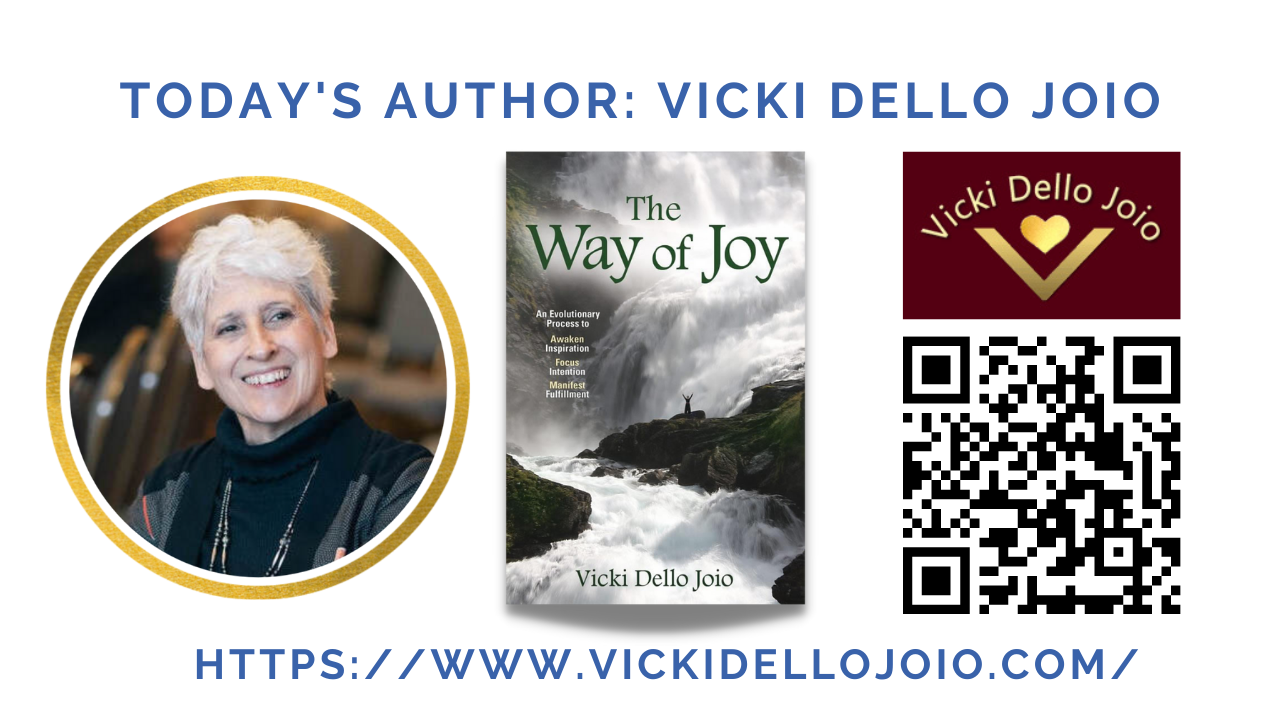
Author Spotlight on Vicki Dello Joio

Author Spotlight

Author Spotlight on Vicki Dello Joio

Let’s talk

Judy: And today is April 4th and I’m Judy Baker, Book Marketing Mentor. And this is another episode of Author Spotlight. And today I have Vicki Dello Joio with me, and she is a master at energy and presentation, and she has shown that. Forty-five years as a Qi Gong practitioner. And we will explain what your gong is for those of you who don’t know. She’s a master teacher and she shows how joy is a life force.

I totally am on board with this. It’s a fuel we can draw from, and it allows us to embrace life’s complexities while expanding our capacity to achieve our potential, Vicki. Has a towel list philosophy. She presents a worldview that there are nine laws, principles, and practices to reflect on three realms.

Which is inspiration human, which is intention and earth manifestation. I have been in a class with Vicki and I will tell you; she is a brilliant person at bringing stories into the mix and how you can use your energy. Even if you’re shy to project your message and connect with people. And. Welcome, Vicki.

Get Your Copy of the Way of Joy

Connect with Vicki Dello Joio

  • https://www.vickidellojoio.com/
  • https://yourpowerpresence.com/
  • Https://www.linkedin.com/in/vickidellojoio/
  • Https://www.facebook.com/WayofJoy

Author Spotlight on Vicki Dello Joio Transcript

And I want to know two things about you right off the bat. What would you say is your most energetic part of your day? I’m going to throw you on that one,

Vicki: but you said two things. So I’ll just start with that. Okay. So first of all, I just want to say, thank you so much, Judy. I feel so honored to be on your Author Spotlight.

I think the work that you’re doing to bring authors forward is so important and so incredibly inspiring. So I just wanted to acknowledge that and say thank you. I would say that the most energetic part of my day is when I. When I have a sense that I hit that place in the zone, it can happen at different times of the day, but you know, that those, those moments, those moments of grace, where you just have the sense that you’re on your course, you’re doing what you want to do.

Success

I remember that I had the sense of what success was a few years ago. I’m a performer as well as a she going teacher. And I, I work a lot with, with business people and entrepreneurs on how to deliver their message. Well, but in this case, I was doing my solo show in New York city, which is where I grew up.

So I was going back to my hometown I’m in California, going back to my hometown, to perform, and we’d had a great run. It was sold. All the time we were getting standing ovations every night. And my sense of success was when one evening I was going to the theater. I was staying at his place in Berlin. And it was in the place I was performing was in the village in Manhattan.

So I was taking the long subway ride. I had this long subway ride ahead of me as I was walking to the subway stop. It was summertime. And it had like, it just done a little bit of very light rain. And there’s that smell that comes up from concrete that I think of as specifically a New York smell. So as walking, I knew it was gonna be a great show cause they had all been great shows.

I knew it was going to, you know, I didn’t have to worry about money or anything else. It was just me walking to the subway to go perform. That was probably one of the most energetic. Points in my life, because it was really that sense of success meant being on the path to where I want to go. It wasn’t so much about, oh, I’m so glad.

I mean, it was great to have standing ovations. It’s not like I’m trying to pretend that it didn’t matter, but it wasn’t actually the highlight for me, the highlight for me was that sense of I am on the path that I need to be on. Right. So different times of day. I like that. Well, the second thing not with that question because you and I both know what Qi Gong is, but there are people who have never experienced don’t know what it is.

And I want you to explain how you got into that and why it’s so important. There’s a long story and a short story. I’ll try to keep it fairly condensed. First of all, she going is coming from China. It’s a, it’s a martial healing. Art kind of goes back and forth between both. She goes is actually an umbrella word.

It’s a word that I think of like dance. So you could say, well, I, I take dance classes. Well, Alvin Ailey style. Is it ballet? Is it tap? Is it modern? Is it, what, what is it? So she goes and has medical Qi Gong underneath it. So that’s for healing. And that based on Chinese medicine, both classical and traditional Chinese medicine, it’s got a martial art, which is Tai-Chi and other forms, which are more robust.

And then it has a spiritual side. It probably has many others as well. There’s over 6,000 exercises that get called. She going in the word actually became into being. Some people say the 40, some people say the fifties, but it was, it was a word that they came up with in China to describe pretty much any of these energy practice or cheap practice systems that incorporate movement.

Whether that’s internal movement or external, actually moving a meditation and intention, bringing to a focus here, your thoughts and how you, how you, how you move energy with your intention, the way I got into it. Or did you want to ask something or say something because no?

Judy: I do want to, I do want to know how you got into it because you know, you and I are.

How did you find Qi Gong?

Born in the United States and, you know, wandering around. And so how did, how in the world did you find out about Qi Gong?

Vicki: Well, my first intro, Qi Gong to Tai Chi Chuan and I was in a, I was 16, I think 17, I was in a summer program at a theater at a theater school. And they had brought in a Tai Chi teacher who was an old man who was teaching this form.

And I’d never heard of Tai-Chi Chuan at that point. He was, he was. He was. What do I want to say about him? The big cause they claim to fame was that he was probably in his seventies. You know, I thought that was really old at the time he had just, his wife had just had a newborn. So this was supposed to be a big sign of the Realty in his, you know, macho or what, not macho, but, you know, sense of being really strong.

And for me as a young lesbian, that meant nothing. I had no interest in becoming that, but when I started actually doing the movie. It really just felt like coming home. I don’t know what else to say about it. It just felt so familiar. So that was my first introduction to she go home or to take each one later on, I started doing more intense fighting forms, martial arts.

Like particularly one called Kaja Kimbo, which is basically was created to help people defend themselves on the street. It was created in Hawaii by five different martial arts masters around street fighting. I started doing that because I had the sense that I needed to be able to defend myself. I had been attacked on the street earlier.

I realized I wanted to learn something that where I could take myself. I could take myself to another level of self-protection. So I began doing that. This is, this story could, can go on for a bit, but, but basically while I was doing it, there was a point in my life where I was breaking up with my partner.

She and I were training at the same school. And for some reason, our teacher thought it would be great to have us spar with each other. So we were hitting and punching and kicking each other at school. Then at home, we were screaming and yelling and it’s not a pretty time in my life. But what I realized is one day I was walking home from from, from the Bart, which is our subway system here.

As I was walking, there was a guy that came around the corner. You know how sometimes you can see somebody and you can know this is something I need to, you know, 10, I go out there and the energy’s a little funky. His energy was like, He came up to me. He reached out to grab me as he did. I had the sense of growing through my spine.

I lengthened the back of my neck. I had space between my vertebrae. It was just instinctive. I didn’t know what I was doing. His hand literally bounced off of contact. It was like, boom. It bounced off it. Like without even touching me about six inches from my body. He walked away, looking at his hand and looking at me and looking at his hand and trying to figure it out.

So I knew he hadn’t missed, there was something there. When I got home, I had a message from a colleague and friend who had became like, she’d gone teacher. She said, I think you need to start learning these internal arts again, go back to that. So I began studying to go and found out that the name for this was something that is called , which has to do with your externalized.

This becomes very important, not just in terms of self-defense or even how we maybe want to carry ourselves in the world. But it’s really important when we start to think that there’s energy that’s coming from us. That’s a real palpable thing. This guy didn’t know from it. I didn’t know before. Yet he bounced and he literally bounced and he could have reached me very easily that this is something that’s really important for people who are speakers, who are business people.

I began to think about what is the, you know, the energy that allow you to break through a bunch of bricks or a board with your hand. What if we could take that energy and apply it in our. In terms of how we communicate, whether we’re with clients or referral partners or colleagues, or whether we’re making sales, whatever it might be.

What if, or just in terms of organizing our business life, what, what does our business look like? How do we create it? What if we took that kind of energy and applied it in that way? What if we can combine the two? So that was a big motivator for me in terms of how I bring into the world that I work with.

Now, I work with people. All over from artists to lawyers and business people, to writers, to people who are just looking to feel better in their bodies. So, and the thing that all of these people have in common is that they all have begun to recognize that it’s your energy that you bring to everything that you do that matters the most.

Tai Chi Connection

Judy: I’m sitting here because my mind is racing and you made me remember. One of my theater instructors, because I studied theater in college. We did, we did Tai Chi and we, and we did balance work on, on it wasn’t a Bosu ball, but it was a balance board. And as I’m doing TRX now, and I’m doing Pilates and I’m going, oh, oh, all of that is there.

And what you said is so spot on. I do a regular practice with acupressure. I’ve worked with an acupressure person. She’s, you know, certified. I worked with her for years and we even do distance sessions. So she’s, we’re doing it over Zoom. And I know some of you out there are going, what, what are you talking about?

But our energy can be transmitted in so many different ways. When you get tuned into it, then it makes sense. But until you start feeling, it doesn’t resonate yet.

Vicki: That sounds a little woo. Right.

Judy: But everything you said, I’m going, I get it. I can, I could picture you in that situation. I been in that situation where I said, okay, I need to, you know, bring everything.

And once I do that, there’s also this sense of calm that doesn’t show up when you’re. You know, you’re scattered, so it’s both projecting out, but it’s also centering centering. So I really appreciate what you said. It makes

Vicki: well, you know, there’s that, that thing about, I don’t know if this is actually real, but that the butterfly across the ocean can be the start of a hurricane in another part of the world.

Yeah. Have you heard that?

Judy: That heard that? Yeah.

Vicki: I don’t know if that’s actually science or, or just wonder wonderful story that I love, but I do know that I had a teacher who was sent that, that if we can know that when they cut down the trees in the Amazon, that’s going to impact us here in the same way we can think about if we’re working on energetic field here that.

Actually impact what’s happening in the in in the Amazon or other parts of the world. I think that there’s something to this. I it’s, I teach my Qi Gong class that I’m teaching now on Zoom, since the pandemic I call living in the chief field, because what I find is that when people actually start to do these practices in a group, they access.

Bigger resource than they do just on their own, not that working on your own and having your own practice. Isn’t critical. It’s very, you know, very, very useful, but to have that sense that the people are all in Europe, in Mexico and Canada across the country. So it’s not like it’s all people in my area.

But there’s a sense that as we’re moving this together, there’s a rising, that feels, it feels almost like being fed from the bottom up. So for me, it’s become very, very real. And I have to say that one of the things I often talk about is. Well, I grew up in New York city. Very, very practical. What you see is what you get kind of like there’s no, like there’s no who my, my, my, my clients call me a Renegade woo coach, because I have this practical side and then I’m also love tapping into this other piece.

So I grew up thinking that that was all there was. When I moved to California, I was really afraid. I’d become one of those, you know, people whose feet don’t touch the ground. Who’s sort of walking in the air. Exactly, exactly like me. So I became my own worst fear right now. This is what I teach. This is what I, not only believe, but have just seen so much evidence.

I mean that, the story about what she, I have many of them, of how I have seen used watched my students use this energy field very intentionally with incredible results.

Judy: Well, you and I both know this being performers. There’s a difference between rehearsing in a room by yourself and then the energy that happens when you’re in front of an audience. And that is so different. And Zoom is it’s tricky doing the phone Zoom. I will say that it’s still, I still have a little struggle with it, but I’ve gotten better. There’s an exchange and that, you know, publishing it’s an exchange of ideas. Performing is an exchange of ideas and energy.

And that’s, that’s the beauty and what you were talking about. This group energy that happens. I mean, now scientists are finding, you know, we used to think only mushrooms were connected and had, you know, miles and miles and miles. Now they know that trees are connected. Everything you said about, do we influence our environment? We do. If, well, we we’ve seen it. We’ve seen it with what happened politically in the last year that when there’s a feed of, of angry and upset, it tends to grow.

If instead we’re having a conversation going, we don’t want to be on that side of the conversation. We want to be on the com on the side of. Maybe I don’t agree with you, but I’m curious. I want to know who you are and what’s going on. Then there can be a real conversation rather than just people throwing things at each other.

So.

Reciprocity

Vicki: I liked it because it really makes me think of how deep listening is one piece of important reciprocity. Right? You say something, I take it in and I hear it. There’s a reciprocity just in my receiving it. Then I respond or in however I do, if you’re receiving it, then we start to create this loop right.

Of reciprocity. That’s like an infinity sign. It goes back and forth between us or between you and your audience. Are you and your readers? You never also you also, as authors, we never really know who we’re hitting and how, but there is that sense. I think that when we put it out there, there’s a vision that it’s going to be helping.

You know, people often say if I can help one person, but it may be hundreds, thousands, millions of people. I had this incredible experience where I, s omebody reached out to me because she had read the way of joy. She, I think she found me on Facebook or something like that. She’s somebody who has started this incredible school for Dalit girls in India, Dalit called untouchables.

So they’re the poorest cast in India. And she started a leadership program for these girls and she was using The Way of Joy book as kind of a structure to be able to help these young people empower themselves and be able to move into a whole other level. So I had no idea until I had the book had been published for a couple of years when she reached out to me.

So of course I donated a lot of stuff, so that to continue that important work, but we don’t know as authors who it’s going to reach. I had no idea. I almost disowned my book after I wrote it because I felt, oh, it’s. It’s got a fair amount of complexity. It’s not a simple type of book. It’s something that’s got a lot of different layers, storytelling memoir, as well as practices, as well as theory, as well as the structure that I’ve created, that I call the way of joy, the nine ways to access joy as a fuel in your life instead of a goal.

So. It’s amazing. I think there’s something so brave, those of us who write and put it out there, it’s such a brave thing to do, and the influence can be incalculable.

The Way of Joy Origins

Judy: I mean, you’re bringing up a good point. Now, The Way of Joy is, I mean, the title really comes out of your belief system. Is that correct?

Vicki: Yes. Partly. Here’s the, here’s this confession. I was when I, right before I came up with this as a name for the work I’ve been doing the work at the point, at that point for probably about 30 years or something. I I realized that my name means victory of joy, Victoria, Dello, Joio. So I thought, well, what would that be like if I, what, what does, what does victory enjoining life mean?

What, how can I, how can I think about that? So part of it was just trying to live up to the legacy of the name that I was born with.

Judy: Oh, I’m sitting here just being speechless, because I think about how some of us don’t really know what our names mean and. People who I know people who, you know, renamed themselves and, and all kinds of things.

But if you go back to the roots of that, that is, that’s just so perfect for you. Absolutely. It’s a perfect name for you. When, when you undertook the process of writing your book, what spurred you to do that because you and I both know. And so to all of you watching, it’s a lot of work to write a book.

Vicki: Oh, it was the most work I’ve ever done in my life.

It’s one of those kinds of never, again, things, although I have got a new one kind of cooking up a little bit, maybe more of a workbook that would go with this. I had been teaching for. I dunno, I’ve been teaching for a long time. I was starting to do something that I, that my students nicknamed Dharma talks.

I often follow the lead of my students. I don’t tend to get this I am the Dharma, but I, I started doing these talks on these different things. The themes, like how to circles become spirals? What does that mean in our life when we’re kind of repeating patterns, how do we break through? Or what is it? What are boundaries?

What boundaries look like? How to boundaries dissolve barriers? What does that? So there’s this different concepts that I was coming up with, that I was talking about and having dialogue and the students would all it wasn’t like me just expounding. I would talk about something for a while and then we’d have dialogue about it.

At some point, one of my students said: “you really need to write a book about this.” I sorta like Naa, naa. Now I’m not a writer, but it did keep calling me. I actually ended up closing my school. I had a school at that point with a lot of different classes. I closed the school or hired people to, to teach my classes, went to the country, borrowed money, went to the country to write my book.

Three months into it. It was like, ah, it’s all coming through. I was in the what’s called the heaven realm. Everything is possible. It’s the place of full potential. Everything was great. Then I get a call from my uncle who was like a father to me, very, very beautiful man that he had end stage lung cancer, my mother and I flew back to be with him during his last days.

And I was there sort of, almost like a doula during his final, final weeks. Then I got back. One of my senior students was diagnosed with end stage lung cancer plus, and she was the mother of my goddaughter, who was seven at the time. Plus my, my mom was diagnosed with double breast cancer. So there was this moment where it was really I had another friend say “Vicki. I’m so frustrated for you borrow this money. You went to the country to go write your book. Now all of these things are calling for your attention. You’re needing to do all these things.” I realized I didn’t feel victimized at all. I felt like this was a chance to kitchen test these theories.

If I had the audacity to say, we can use joy as a fuel in every choice we make, even in the face of challenges, what does that mean? Not only if I’m suffering, but if the people that I love are suffering, what does joy look like then?

So it really felt like I had to put my, my theories to the test before I could really come out and really own, this is a system that worked for me and it hopefully will work for other people.

Energy Heals

Judy: That makes perfect sense. And I can, I can just echo. The fact that I had people who did energy work when I was diagnosed with cancer and because they had positive visions of what was going to happen. And because I had a belief of a good outcome, my experience was very different than many of the other women I’ve met along the way who also had ovarian cancer.

They suffered. I wasn’t really suffering. I mean, I, it, things were not normal, but certainly knowing that there are ways to, to draw on energy outside as well as inside is so different of an approach than just saying, oh, I’m, I’m the patient and here help me. And whatever you do is going to be okay. That’s not enough.

It really isn’t enough. And I, I really, I hear what you’re saying too. Being called to write the book and then, oh, here, let’s see what it really looks like in the real world. If you’d like to share anything about what happened as you were being called on. I’d love to hear that.

Vicki: What do you mean by what happened?

Judy: Well, here you were here, you were dealing with, with your family, with cancer, you were dealing with a friend with cancer. How did, how did you showing up help in that situation and what, what really transpired, how, you know, how was it different, do you think than had you not had this information?

Vicki: I wasn’t, I wasn’t ever, ever at a place where I was thrown or that I was, I wouldn’t have maybe thrown is not the right word where I felt victimized.

I guess that’s the main thing. It kept me out of victim mode. Now I want to say there are times when we are victimized, where things happen and we are treated unjustly and unfairly, but there’s a victim mindset that can get locked in. And that’s, I think part of my practice helped me come back to the present.

So not only those things that I listed happened, but then my, my wife’s father died, then my own father died. So I was with my dad as he, as he died. In fact, I was with my mom as she died too. Although she died much later than the, than the breast cancer diagnosis. There’s a process. I think that had to do with just how do I align?

How do I stay really grounded and present? So even if I’m seeing somebody suffer, how do I have empathy, compassion, show up for them. But not absorb it into my own body, but more let it move through. So when the pandemic happened or something like that, one of the things I was focusing on was people were having all these different types of reaction from anger to grief, to despair, to depression.

To know that all of those emotions as your guest, Joie Seldon knows so well, all of those emotions are valid and important to feel, but we have to not hang on to any of them, not even the sense of joy or relief, but to let, let it move through us as water. So the point is to stay aligned, to recognize that recognize that these emotions and these different challenges circumstances are going to come to continue to do the practice of staying centered, staying aligned between heaven, which has to do with vision which has to do with clarity, which has to do with inspiration and earth, which has to do with being really grounded, being really present, being able to access what resources are there for us, so that we can then extend from the heart. Right? Energy comes from above, down and up from below. Then we, energy comes out from the heart.

This is going a little bit into the woo side of it, but that there’s this is that tai chi energy that when I lengthened my spine instinctively, I went into a place that I think of as I am, as opposed to you can’t as opposed to I’m going to control this. It was more, I am here and I’m just allowing this.

Energy to emanate out and discovered that it was palpable, that it wasn’t just a inner experience, but it was actually something that was felt by somebody else who would not have necessarily been open to it.

Judy: Wow.

I think the conversation here, you’re really opening people’s eyes up to what is possible and. You know, that things, things are, things are available. If we pay attention. There is energy available to help us there’s energy available to protect us and being able to open up to let energy in. That’s also very, very key, but I think what you’ve also described is it’s being a conduit.

You were a conduit when you were writing. You were a conduit when you are performing and when you’re helping other people. And that is, you know, as a, as a business owner, that’s, that’s what I’m here to do, too. I’m here to facilitate. I’m not here to tell you, oh, you must do this, this and this. I’m here to work with you.

And to help you bring out the best in you. And you are doing that with your performance, with your book, with, you know, when you speak in front of other people. And I just love that.

Vicki: Thank you so much Judy. I love how you put the beautiful.

Judy: you are very welcome. Well, I’m curious when you were, when you were writing your book, did you, did you do any research and to look to see if there were any other books that were like yours?

I’m I’m trying to think in my head if I can think of any, but did you find anything that was like your book?

Vicki: No, I actually, I know that that was something you asked me to think about ahead of time. There really isn’t any book that’s like my book in the sense that what I’ve done is taken my understanding of Daoist principles or some Daoist, not all of them, but some Daoist principles.

My understanding of what these practices have taught me when I was very young, I used to ask a Thai Chi teacher, you know, what is this movement? And what does this movement mean? And what does that mean? They would say when you’re very old you will understand. So maybe I’m very old. Now I started, I started to have a sense that these forms were speaking to me that they were coming through me.

Like you said, being, being a conduit. I love how you put that. I guess that what I would say is that there are things that are related. Like for example, there’s a book called Taking the War out of our Words: the art of powerful non-defensive communication that was written by a sister- friend somebody who is a very close person to my heart.

I’ve studied with her, her, her system of communication for years. It’s, it’s a life practice in the same way that The Way of Joy is. Because what she’s done is she’s taken the idea of being centered, grounded open-hearted and yet having boundaries and looking at what boundaries are, which is a whole other conversation and put it into language.

How do we dismantle basically a war attitude. Whenever we get defensive, we go into different war types of responses where we’re sabotaging ourselves or we’re defending ourselves, or we’re trying to prove something or prove the other person’s wrong. What happens when we get defensive? That, that for me is the language of chi.

It’s the language of, I am, as opposed to you. Can’t, like I said earlier, so that would be one book that we it’s not, I mean, we quote each other in our books, but it’s not the same material, but it’s related in terms of this concept. How do we emanate from our best self or how do we emanate our heart energy in a way that is not just sort of woo and not just about love everybody or, or spiritual bypassing really about how do we ground ourselves in the authenticity of who we are.

Go back to that place of centering, like you were talking about earlier and then move from there. So that was the language for it. There’s a lot of Qi Gong books. So if people are interested in, Qi Gong and particularly for medical Qi Gong, medical Qi Gong, the most popular Qi Gong here in this country.

There’s Roger Yanka, Ken Cohen, Daisy Lee. There there’s a lot of teachers out there that have written books or that are teachers that I would highly recommend, but I don’t know anyone who’s sort of done this. And then I took these because I took these concepts of heaven, human and earth, inspiration, love and joy, grounding and empowerment.

And broke those down into three different triads, which I’m not going to get into the complexity right now, but that have to do with these different themes. Like I said, circle is open and the spirals or boundaries dissolve barriers, or how do we embrace wholeness? There’s a there’s there’s different practices that we can do that help explore that in our lives.

It’s really my own take. That’s why there isn’t anything like it, it’s something it’s my own personal contribution, like offering to the large, vast, very forgiving system that is Dao, because I also had to ask myself as a white woman, what does it mean for me as a white European woman to be doing these Chinese practices?

Because I don’t want to be appropriating anything. So I’ve studied with a lot of traditional masters. But I really feel like it’s very important as a Western woman. I can only understand what I understand through my filters and to own that. It’s my filter. I’m not trying to pretend I’m carrying forward a lineage.

I don’t have that capacity, but I do have the capacity to create something from what I’ve learned, how the, how the forms, how the practice has taught me.

Share a Tip

Judy: I would appreciate it. If you would share one tip. When I ask you something a little differently. One tip when authors go to talk about their book and I’ve had this experience too, I can read other people’s words.

I can perform other people’s words and you get me up there to perform my words and. Oh, I’d rather be under the bus. And it’s, it’s really interesting because I can, I can do workshops, not a problem, but you get me to try to read and it’s like, oh, what, what would you share with us that could help make it easier and more enjoyable.

Vicki: I love that question because it’s so important, right? When we’re, when we’re wanting to share this life commitment that we’ve done that by pouring something into a book it’s really important how we convey it so that people get to receive it, receive it, the gift that you’re offering. There’s a few different things.

I tend to go to the body first just because I tend to be very kinesthetic and I’m body-based so this is where I would use some Qi Gong principles or concepts. The first one that I would do, especially if somebody is preparing to go onto a stage, they’re about to do their first reading. So it’s so big.

I remember the reading from my book and it was there. It was, so there was so many, there was, you know, a few hundred people there. It was, it was so intimidating. So I did these practices myself, which has first of all:

to lengthen your spine. Is this going to sound? It sounds so obvious, but we know that good posture is good.

Right. We know that we want to stand tall and all that, but when we lengthen our spine, we actually start to open up pathways that help to clear out that brain fog that comes with when we’re feeling intimidated or scared. Stage fright or shy. So to have a sense that I’m lengthening because when we’re scared, we tend to hunker down, right.

We tend to compress our spine. So you want to lengthen your spine. Energy actually moves between the bones of your spine through your vertebrae, around your vertebrae. So that allows you then to be able to speak from a place of more centered.

When we open this way, open the crown and then focus on our feet on the ground and really realize we have feet on the ground.

Sometimes I’ll have people. Around before they go onstage, just stomp their feet so that they remember that there’s something grounding there that they can do.

The next thing is so the most important thing is to open up where the gut clenches, right? The gut clenches, when, when we’re scared or shy, or we don’t quite know how to convey what we want to convey.

Another easy trick is to just place your hands on your heart before you go on stage and just took, take a moment to focus in on why you wrote that book, what it was that compelled you to help other business owners. If you’re a business, you know, written a busy business owner manual, or if you have whatever it is that you’re, you’re sharing and teaching, what is that reason why?

And then to circle your hands over your heart. Three to nine times, I recommend nine times in each direction. So that until you start to feel that your chest feels a little warmer from your hands, that’s going to also help relax the heart, right? Because the heart is the center of impatience and a sense of also sense of not connecting right when we don’t want we do it when we’re scared like that, we’re not connecting. So we want to soften that so that we can remember that what we’re doing is about the people that we’re wanting to serve. It’s not about how people perceive me or what their analysis is going to be of what I read from my book.

It’s not about that. It’s about, here’s what I want you to know. For example, in my case, I want you to know that joy is an endless resource that you can access any time and it’s your birthright. It’s something you’re born with, right. Every baby has joy. So if that was what I’m doing, I’m talking to you about that.

I’m not trying to prove anything about me. So that’s that’s a second thing that you can do.

A third thing that you can do is, you know, some people do that power pose, you know, doing something physical. Yeah. Right. Something physical stamping your feet is really good for grounding. The other thing I like to do is called the shower where you just taking your hands up and then bringing energy down through the top of your head.

These you’re smiling and nodding. This is in probably every Qi Gong system I’ve ever studied over the last 50 years. You’re going to just draw the sense of the, the, the sense that you’re not alone, that there’s something bigger guiding you. It’s a sense of like, who are your angels, your spirit guides, God, Goddess has higher power.

However you think about that. Or even if you don’t have a sense of spirituality as though you’re up in the cosmos, looking down at your life here, which is so small, right? We’re a little ants when we’re up in that cosmic place to be able to have that sense of perspective so that when we’re coming here, then it doesn’t, then it’s not personal.

It’s about the message it’s about what are you offering? What are you giving to people?

Judy: Oh, I, I just been feeling so happy because I know too, what you’re, when you’re talking about lengthening your spine, you’re also opening up your diaphragm so that your voice can come out and you’re right. Absolutely. Right.

When we’re scared we go, like, you know, we pull in and then of course. If you’ve ever been frightened, that’s the first thing that happens is that your breath has gone, right? So you you’re giving us some. Kind of flowing ways to, you know, feel connected.

Vicki: Yes, yes. And the breath, like you say, the breath is, is the essence, right?

The breath is your life. That is you coming forward. Your breath is your voice also, it’s your breath of what’s coming forward. So, yes, exactly. When we lengthen, we open the diaphragm and we are able to have oxygen oxygenate our whole system.

Judy: Oh, I love it. Well, how, I mean, I think you really described how you’ve been using your book and your book came out of questions that your students asked.

If we were to help you reach the people you want to connect with. How could we do that?

Where to Find Vicki

Vicki: Check out my website, probably. If, if you’re interested in for yourself around what, one of the things I sometimes do is just a free energy read. I can look at people and I can pretty quickly assess where they’re stuck and where there’s flow. And the stuckness is actually super important. Right?

Stagnation is the, the core problem, both in Western and Eastern medicine for any disease, whether or mental, emotional spiritual, physical, this is stagnation, right? That’s what that we were talking about with fear, that, that, so if people want to ask me for a quick read go to yourpowerpresence.com or if you’re looking at what is, what are some stories that I can tell that will help convey my book quickly so that people, because one of the main, I work a lot with speakers and I work a lot with people who are in front of an audience. And one of the main mistakes people make is either that there’s too much detail. They go on and on and it’s almost like they get lost in the weeds, or it’s not enough detail.

It’s so dry that it’s like reciting a resume or CV and people, you lose people that way. So finding out what are the details that matter and what don’t, doesn’t what helps you paint the picture so that when you’re speaking, people can go into the movie of what you’re talking about, not just hear the information.

So it’s not data flowing one way that is unilateral, but there’s that reciprocity that we’re talking about that happens when we tell stories in such a way that evoke empathy and connection. So this is, this is the work that I do a lot in the world. And if you want to hear more, find out more about how I could support you, particularly those of you who are authors, www.yourpowerpresence.com.

You can also check out my web Facebook page. That’s energy matters most, if you do a search for energy matters most you’ll find my energy matters page, where we have a whole lot of people who are doing different exchanges about what moves your energy and how do you do it? Because of course there’s myriad of ways and they’re all valuable.

Judy: Absolutely. Is there anything I haven’t asked or that you haven’t shared yet that you would like to share with the audience?

Vicki: I just really appreciate this conversation because I think this conversation is a way in which energy just has flowed. Right? We don’t, we didn’t necessarily know what, where, what territory we’re going to.

I didn’t know what stories I would tell. That sense of ease being able to be centered. I want that for all of you, everybody, whether you’re on podcasts or on YouTube channels or you’re, you’re in front of a live audience or a small audience in your living room, which can sometimes be the most challenging.

I want for you to have that sense of access to that joy as a fuel so that you can convey what you need to convey with passion, presence, and power.

Judy: Oh, Vicki, you have been just a delight and I am so happy that, you know, we’ve gotten to know each other and I’m looking forward to doing more with you because I really do believe you’ve got, you’ve been able to blend the physical practice with being onstage, being, having that presence and being so willing to share that with other people that makes me very happy. So I will be sure to have your links in the notes.

Author Spotlight on Vicki Dello Joio

And with that, I appreciate having another episode of Author Spotlight, this one with Vicki. And if you’d like to check out more come to bookmarketingmentor.com.

And with that, this is Judy Baker Book Marketing Mentor signing off. Thank you.

Vicki: Thank you.

Next Page »

Footer

Search

Time in Sonoma:

Copyright © 2026 · Coaching Plus on Genesis Framework